.jpg)

Comparative Analysis of Elastic Recovery of Elastomeric Impression Materials after Disinfection and Autoclaving
Inam Bushra  , Isha Saxena , Rahul Paul , Mayura Paul , Mukesh Kumar Goyal* , Madhav , Shreysha and Komal Shah
1Department of Prosthodontics and Crown and Bridge, Inderprastha Dental College and Hospital , Site-IV, Industrial Area, Sahibabad, Ghaziabad, Uttar Pradesh India .
Dental impression materials are frequently contaminated with microorganisms from saliva and blood, posing a risk of cross-contamination during the fabrication of stone models. Tomitigate this risk, the FDI World Dental Federation (1998) recommended thorough cleaning and disinfection of all impression materials.
To evaluate and compare the elastic recovery of four different elastomeric impression materials following chemical disinfection and autoclaving.
A total of 60 specimens were prepared, with 15 specimens allocated to each material: polysulfide (Orikam, India), polyether (3M ESPE Monophase, USA), condensation silicone (Zhermack Zetaplus, Italy), and addition silicone (Ivoclar Vivadent, Liechtenstein).
Each material group was further divided into three subgroups (n = 5):Chemical disinfection, Autoclaving, Control (no treatment). Elastic recovery of all specimens was measured using a universal testing machine.
No statistically significant differences in elastic recovery were observed among the materials following chemical disinfection or autoclaving. All tested materials demonstrated comparable elastic recovery under the evaluated conditions.
Within the limitations of this study, chemical disinfection and autoclaving did not significantly affect the elastic recovery of the tested elastomeric impression materials. All materials exhibited comparable performance after sterilization procedures.
Addition silicone impression materials, autoclave cycle, chemical disinfection, sterilization, Universal Testing Machine.
Copy the following to cite this article:
Bushra I, Saxena I, Paul R, Paul M, Goyal M. K, Madhav M, Shreysha S, Shah K. Comparative Analysis of Elastic Recovery of Elastomeric Impression Materials after Disinfection and Autoclaving. Enviro Dental Journal 2026;8(2).
Copy the following to cite this URL:
Bushra I, Saxena I, Paul R, Paul M, Goyal M. K, Madhav M, Shreysha S, Shah K. Comparative Analysis of Elastic Recovery of Elastomeric Impression Materials after Disinfection and Autoclaving. Enviro Dental Journal 2026;8(2). Available here: https://bit.ly/4ofgp3q
Citation Manager

Introduction
Dental impressions are fundamental in restorative dentistry as they provide accurate replicas of intraoral structures required for the fabrication of prostheses. However, these impressions are frequently contaminated with saliva and blood, which can serve as potential sources of cross-contamination during handling and laboratory procedures. Therefore, strict infection control measures are essential to prevent the transmission of microorganisms. The FDI World Dental Federation has recommended that all impression materials should be thoroughly cleaned and disinfected before being sent to the dental laboratory.1,2
Elastomeric impression materials are widely used due to their superior dimensional accuracy, elastic recovery, and ability to reproduce fine surface details. Among their properties, elastic recovery plays a critical role in ensuring that impressions return to their original shape after removal from the oral cavity without permanent deformation. Dimensional stability is equally important, as it ensures that the impression maintains its accuracy over time, which is essential for precise prosthesis fabrication. Any alteration in these properties may lead to inaccuracies and compromised clinical outcomes.3
Infection control procedures such as chemical disinfection and steam sterilization are routinely employed to reduce microbial contamination. Chemical disinfectants, including glutaraldehyde-based solutions, are commonly used due to their effectiveness and ease of application. Steam sterilization (autoclaving), on the other hand, provides a higher level of microbial control but involves exposure to elevated temperature and pressure, which may influence the physical and mechanical properties of impression materials.4,5
Recent advancements in material science have led to the development of elastomeric materials with improved resistance to sterilization procedures. Modified siloxane materials with enhanced hydrophilicity have been introduced to combine the favorable properties of polyether and addition silicone. These materials are claimed to maintain their structural integrity even after exposure to harsh sterilization conditions. However, despite these advancements, the available literature presents inconsistent findings regarding the effect of chemical disinfection and autoclaving on the elastic recovery of elastomeric impression materials.6
Furthermore, many previous studies have evaluated only a single type of material or a single disinfection method, limiting the ability to draw comprehensive conclusions. There is a lack of well-designed comparative studies assessing multiple elastomeric materials under both chemical and steam sterilization conditions using standardized methodologies.7 This gap in the literature highlights the need for further investigation. Therefore, the present study aims to evaluate and compare the elastic recovery of elastomeric impression materials following chemical disinfection and steam autoclaving.
Material and Methods
The in-vitro study was conducted in the department of Prosthodontics and crown and bridge, Inderprastha dental college and hospital following Institutional ethical committee guidelines and approval. For this study, 60 specimens were prepared, with 15 specimens for each material (Addition silicone (Ivoclar vivadent Liechtenstein), Condensation silicone (Zhermack Zetaplus), Polyether (3M ESPE Monophase, USA),) and Polysulfide (Orikam India).These were further divided into three groups: one group underwent autoclaving, another group was subjected to chemical disinfection, and the third group served as the control and remained untreated. (Figure 1).
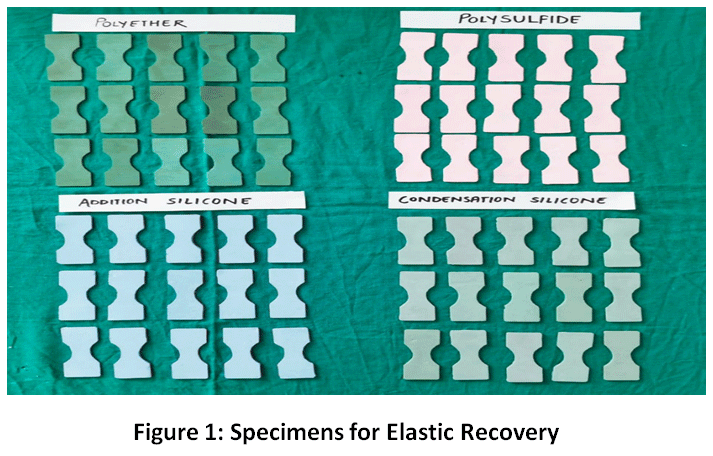 | Figure 1: Specimens for Elastic Recovery
|
The specimens were fabricated using a custom-designed metal die comprising an upper and lower component. The lower component included an aluminium mold with dimensions measuring 11.5 cm × 5 cm × 1 cm, featuring a centrally positioned hourglass-shaped recess with a uniform thickness of 1 mm. This mold also contained escape vents to allow excess material to flow out, ensuring consistent specimen thickness. To evaluate elastic recovery, 15 samples were prepared for each of the four impression materials: addition silicone(Ivoclar vivadent Liechtenstein), condensation silicone (Zhermack Zetaplus), polyether (3M ESPE Monophase, USA), and polysulfide(Orikam India). The impression material was placed into the lower mold, then covered with the upper component. A 5-pound weight was applied to facilitate the expulsion of any surplus material through the escape vents, thereby maintaining a standardized thickness of 1 mm. Once set, each specimen was trimmed using a Bard Parker blade to match the dimensions of an acrylic stencil (A – 3.8 cm, B – 0.9 cm, C – 0.6 cm, D – 0.4 cm). The final thickness of the samples was verified using a digital Vernier calliper to eliminate dimensional errors.A total of 60 specimens were produced, with 15 specimens allocated to each impression material. These were further subdivided into three groups: autoclaving, chemical disinfection, and a control group that remained untreated (5 specimens in each subgroup). Group 1 consisted of 15 specimens of polysulfide impression material (Orikam, India), divided into 5 chemically disinfected, 5 autoclaved, and 5 control specimens. Group 2 included 15 specimens of polyether impression material (3M ESPE Monophase, USA), similarly divided into 5 chemically disinfected, 5 autoclaved, and 5 control specimens. Group 3 comprised 15 specimens of condensation silicone impression material (Zhermack Zetaplus, Italy), with 5 specimens in each subgroup. Group 4 consisted of 15 specimens of addition silicone impression material (Ivoclar Vivadent, Liechtenstein), also divided into 5 chemically disinfected, 5 autoclaved, and 5 control specimens.Before subjecting the specimens to any form of treatmentwhether disinfection or autoclavingbaseline measurements were recorded. These initial assessments included the measurement of length, width, and thickness to determine the original dimensions and elastic characteristics of each sample.For the autoclaving process, five specimens from each type of impression material were placed on sterilization trays. They were then exposed to a conventional autoclave cycle at a temperature of 121°C for 30 minutes to simulate steam sterilization (Figure 2). In the chemical disinfection group, the samples were immersed in a glutaraldehyde solution for a duration of 10 minutes, following the manufacturer’s recommendations. After disinfection, the specimens were rinsed under running tap water for 30 seconds to remove any residual disinfectant (Figure 3).
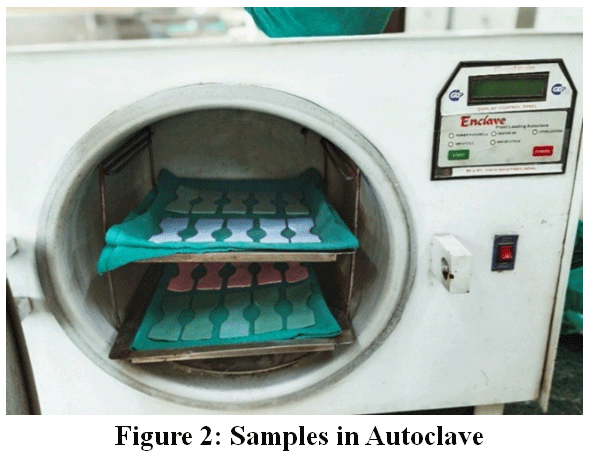 | Figure 2: Samples in Autoclave
|
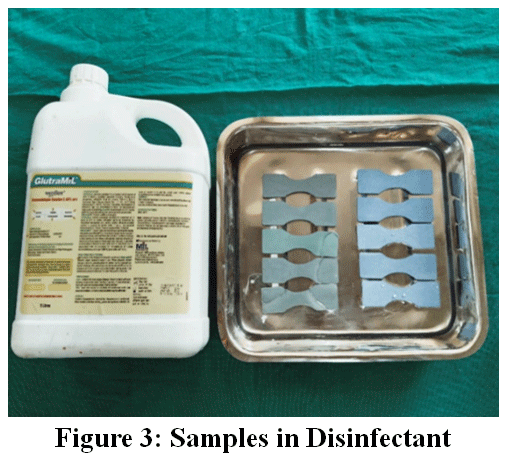 | Figure 3: Samples in Disinfectant
|
Following sterilization, all samples were sealed in sterile bags and stored for 24 hours prior to testing, simulating typical transit time from the dental clinic to the dental laboratory. Each specimen was then secured in the serrated grips of an Instron Universal Testing Machine (Figure 4). A tensile force was applied at a constant crosshead speed of 10 mm/min until the sample fractured. The elongation at breakindicative of material stretchabilitywas recorded in millimetres. Two hours post-failure, the separated segments were measured using a digital Vernier calliper with a 0.01 mm precision. The change in length (^L) was noted, and percentage deformation was calculated to determine the elastic recovery of the impression materials (Figure 5).
.gif) | Figure 4: Universal Testing Machine
|
.gif) | Figure 5: Samples after Testing
|
Elastic recovery will be calculated using the formula:
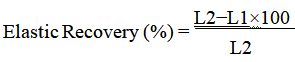
L1 = Length after deformation
L2 = Original length before deformation
The collected data were compiled using Microsoft Excel for initial entry and organization. Statistical evaluation was performed using Minitab software (Version 18). A significance level of P < 0.05 was set to determine statistical relevance. To assess variations both within and between groups, a one-way Analysis of Variance (ANOVA) was conducted. For post-hoc analysis, Tukey's pairwise comparison method was applied at a 95% confidence interval to identify specific group differences.
Results
Table1shows the comparison of mean dimensional changes among different elastomeric impression materials following autoclaving and chemical disinfection. In the autoclave group, addition silicone(Ivoclar vivadent, Liechtenstein) showed the least mean change (-0.002 ± 0.703), followed by polyether(3M ESPE Monophase, USA) (-0.798 ± 0.836), polysulphide(Orikam, India) (-1.17 ± 1.447), and condensation silicone(Zhermack Zetaplus) (-1.39 ± 1.339). However, the difference among the groups was statistically non-significant (F = 1.479, p = 0.258). Similarly, in the disinfectant group, addition silicone (-0.202 ± 0.833) and polyether (-0.200 ± 0.447) demonstrated minimal dimensional changes compared to condensation silicone (-0.403 ± 1.321) and polysulphide (-1.17 ± 0.441). The intergroup comparison again revealed no statistically significant difference (F = 1.499, p = 0.253). Addition Silicone exhibited comparatively better dimensional stability under both conditions, the differences among all tested materials were not statistically significant.Table 2 shows the pairwise comparison of mean differences in dimensional changes among elastomeric impression materials following autoclaving and chemical disinfection. In the autoclave group, addition silicone demonstrated higher mean values compared to condensation silicone (1.39), polysulphide (1.17), and polyether (0.79), but these differences were not statistically significant (p > 0.05). Similarly, comparisons between condensation silicone and polysulphide (-0.21), condensation silicone and polyether (-0.59), as well as polysulphide and polyether (-0.38) also showed non-significant differences. In the disinfectant group, addition silicone showed minimal differences when compared with condensation silicone (0.20), polysulphide (0.96), and polyether (-0.001), all of which were statistically non-significant. Likewise, comparisons among condensation silicone and polysulphide (0.76), condensation silicone and polyether (-0.20), and polysulphide and polyether (-0.97) did not reveal any statistically significant differences.Overall, the pairwise analysis indicates that none of the elastomeric impression materials differed significantly from each other in terms of dimensional changes under both autoclave and disinfectant conditions.
Table 1: Comparison between elastic recovery among 4 groups after chemical disinfection and autoclaving process. (ONE WAY ANOVA)
Variable | Groups | Mean | Std. Deviation | F-value | p-value, S/NS |
Autoclave | Addition Silicones | -0.002 | 0.703 | 1.479 | 0.258, NS |
Condensation Silicones | -1.39 | 1.339 | |||
Polysulphide Material | -1.17 | 1.447 | |||
Polyether Material | -0.798 | 0.836 | |||
Disinfectant | Addition Silicones | -0.202 | 0.833 | 1.499 | 0.253, NS |
Condensation Silicones | -0.403 | 1.321 | |||
Polysulphide Material | -1.17 | 0.441 | |||
Polyether Material | -0.200 | 0.447 |
Table 2: Comparison between elastic recovery among 4 groups after chemical disinfection and autoclaving process. (POST HOC TUKEY’S TEST).
Dependent Variable | Group | Group | Mean Difference | p-value, S/NS |
Autoclave | Addition Silicones | Condensation Silicones | 1.39 | 0.245, NS |
Polysulphide Material | 1.17 | 0.381, NS | ||
Polyether Material | 0.79 | 0.685, NS | ||
Condensation Silicones | Polysulphide Material | -0.21 | 0.990, NS | |
Polyether Material | -0.59 | 0.835, NS | ||
Polysulphide Material | Polyether Material | -0.38 | 0.950, NS | |
Disinfectant | Addition Silicones | Condensation Silicones | 0.20 | 0.981, NS |
Polysulphide Material | 0.96 | 0.301, NS | ||
Polyether Material | -0.001 | 1.000, NS | ||
Condensation Silicones | Polysulphide Material | 0.76 | 0.494, NS | |
Polyether Material | -0.20 | 0.980, NS | ||
Polysulphide Material | Polyether Material | -0.97 | 0.299, NS |
Graph 1 illustrates the comparison of mean values among the control, autoclave, and disinfectant groups, highlighting the effect of different treatment conditions on the measured parameter. The control group demonstrates a mean value of approximately 10.04, which serves as the baseline reference for comparison. The autoclave group shows a mean value almost identical to that of the control group, indicating that the process of autoclaving does not produce any significantalteration in the measured parameter and maintains dimensional stability comparable to untreated samples. In contrast, the disinfectant group exhibits a slightly higher mean value, around 10.06, suggesting a marginal increase when compared to both the control and autoclave groups. Despite this slight variation, the difference remains minimal and does not indicate any substantial deviation. Overall, the graph clearly demonstrates that both autoclaving and chemical disinfection have negligible effects on the measured parameter, withall groups showing closely similar mean values. This suggests that the tested procedures are reliable and do not significantly compromise the dimensional accuracy or stability of the materials, thereby supporting their clinical acceptability.
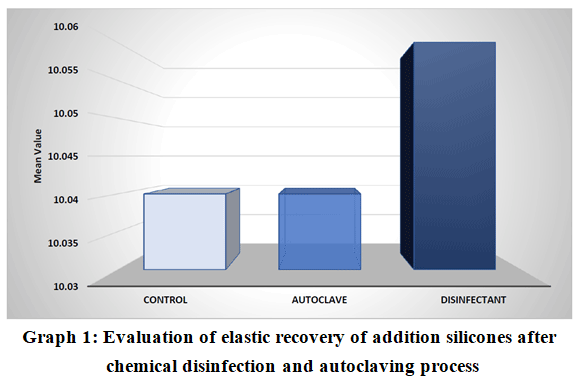 | Graph 1: Evaluation of elastic recovery of addition silicones after chemical disinfection and autoclaving process
|
Discussion
The increasing concern regarding cross-contamination from patients to dental professionals and dental technicians through dental impressions has become a significant issue in clinical dentistry.8 To minimize this risk, standardized protocols for disinfection and sterilization of dental impressions are essential. The present in vitro study evaluated the elastic recovery of four elastomeric impression materials—addition silicone, condensation silicone, polyether, and polysulfide—after chemical disinfection and autoclaving.
An ideal impression material should maintain dimensional accuracy and sufficient elastic recovery to prevent distortion during removal and cast fabrication. In the present study, all materials exhibited some variation in elastic recovery after sterilization procedures. However, the statistical analysis revealed that these differences were not significant (p > 0.05). Therefore, no material can be considered superior based on the current findings.
Chemical disinfection with 2% glutaraldehyde showed minimal changes in elastic recovery across all materials. Similarly, autoclaving resulted in slight variations; however, these changes were not statistically significant. Although minor numerical differences were observed among materials, these variations cannot be interpreted as clinically meaningful due to lack of statistical significance.9
These findings are in agreement with some previous studies that reported minimal or non-significant effects of disinfection procedures on elastomeric impression materials. However, unlike earlier reports suggesting superiority of certain materials or greater effects of autoclaving, the present study does not support such conclusions. This difference may be attributed to variations in methodology, sample size, and testing conditions.10
Within the limitations of this in vitro study, both chemical disinfection and autoclaving can be considered acceptable methods, as they do not significantly affect the elastic recovery of the tested materials. However, clinicians should interpret these results cautiously, as in vitro conditions may not fully simulate clinical scenarios.
Conclusion
Chemical disinfection and autoclaving did not produce a statistically significant effect on the elastic recovery of the tested elastomeric impression materials. All materials demonstrated comparable performance after sterilization, and the observed variations were not clinically meaningful. No material showed superiority based on elastic recovery. Both sterilization methods can be considered effective and suitable for routine clinical use without compromising the functional properties of the impression materials.
Acknowledgement
The authors sincerely acknowledge the support of the research team and laboratory staff for their valuable assistance in sample fabrication and data collection. Their technical expertise and guidance significantly contributed to the successful completion of this study.
Funding Sources
The authors received no financial support for the research, authorship, and/or publication of this article.
Conflict of Interest
The authors declare no conflict of interest related to this study.
Data Availability Statement
All data generated or analyzed during this study are included in this published article.
Ethics Statement
Not applicable, as this is an in vitro study and does not involve human participants or animals.
Informed Consent Statement
This study did not involve human participants, and therefore, informed consent was not required.
Permission to Reproduce Material from Other Sources
Not applicable.
Clinical Trial Registration
Not applicable.
Authors’ Contribution
Inam Bushra: Study Design, Data Collection, Analysis, Manuscript Drafting.
Isha Saxena: Supervision, Study Design, Data Interpretation, Manuscript Revision.
Rahul Paul: Methodology, Data Validation, Editing.
Mayura Paul: Statistical Analysis, Proofreading, Final Manuscript Preparation.
Mukesh Kumar Goyal: Data Collection, Literature Review, Editing.
Madhav: Data Interpretation, Manuscript Review, Intellectual Input.
Shreysha: Data Collection, Sample Preparation, Literature Review.
Komal Shah: Data Analysis, Manuscript Revision, Proofreading.
References
- Guiraldo RD, Borsato TT, Berger SB, Lopes MB, Gonini A Jr, Sinhoreti MA. Surface detail reproduction and dimensional accuracy of stone models: influence of disinfectant solutions and alginate impression materials. J Appl Oral Sci. 2012;20(1):16–21.
- Ahila SC, Subramanian E. Comparative evaluation of dimensional stability and surface quality of gypsum casts retrieved from disinfected addition silicone impressions at various time intervals. J Clin Diagn Res. 2012;6(3):456–459.
- Noha T, Sanaa. Comparative analysis of dimensional changes in autoclavable polyvinyl siloxane (PVS) impressions under various sterilization/disinfection protocols: a randomized controlled trial. Egypt Dent J. 2020;66(2):1235–1242.
- Garg S, et al. Comparison of dimensional accuracy of stone models fabricated by three different impression techniques using two brands of polyvinyl siloxane impression materials. J Contemp Dent Pract. 2019;20(10):1201–1205.
- Nimonkar SV, et al. Comparative evaluation of the effect of chemical disinfectants and ultraviolet disinfection on dimensional stability of the polyvinyl siloxane impressions. J Int Soc Prev Community Dent. 2019;9(3):254–260.
- Reddy SM, et al. Evaluation of dimensional stability and accuracy of autoclavable polyvinyl siloxane impression material. J Indian Prosthodont Soc. 2013;13(4):546–550.
- Surendra GP, et al. Evaluation of dimensional stability of autoclavable elastomeric impression material. J Indian Prosthodont Soc. 2011;11(2):94–98. doi:10.1007/s13191-011-0070-1.
- Mangipudi KS, Jampana VVSN R, Sharma S, et al.Evaluation of Elastic Recovery ofElastomeric Impression Materials Subjected to Various Disinfection Methods: An In-vitro Study. Journal of Clinical and Diagnostic Research. 2024;18(8): ZC06–ZC11.
- Hassan SAB, Al shadidi AAF, Aldosari LI, et al. Effect of chemical disinfection on dimensional stability of polyvinyl ether siloxane: A systematic review and meta-analysis. BMC Oral Health. 2023;2(3):471.
- Singer L, Bourauel C, Habib SI, et al. Tear strength and elastic recovery of hybrid elastomeric impression materials: A comparative study. BMC Research Notes. 2022;1(5):224.